
South Tenerife gets sun almost all year: its airport collects 132 litres of rain per square metre a year, over about 15 days, while the north airport, in La Laguna, collects 520 over 64 (AEMET). But the north is not grey: the trade-wind clouds come and go, and some days the best swim on the island is in a charco on the north coast.
Why the north clouds over and the south doesn't
The culprit has a name: the alisio, the north-easterly trade wind that blows almost all year, and hardest in summer. It arrives loaded with Atlantic moisture, hits the island's northern slopes, rises, cools and condenses into a layer of cloud halfway up the mountain: the famous sea of clouds. Mount Teide and the central ridge act as a wall, and on the other side, in the south, the air comes down dry and clear.
When that layer parks itself over La Laguna or the Orotava valley, we call it panza de burro (donkey's belly): grey, low and in no hurry to leave all morning. Above it, sunshine: the Izaña observatory, at 2,369 metres, adds up to about 3,470 hours of sun a year, far more than the south airport.
- Tenerife South airport (64 metres): 132 litres per square metre a year, about 15 days of rain and 114 clear days.
- Tenerife North airport (632 metres, in La Laguna): 520 litres, 64 days of rain and 44 clear days.
- Source: AEMET climate normals, 1981-2010.
Don't read it backwards: the north airport sits at 632 metres, right where the cloud stops. The north coast, from Puerto de la Cruz to Garachico, lies below it, and on many days it's sunny there while La Laguna stays grey.
The south: sun almost guaranteed (and some wind)
From Los Cristianos to Costa Adeje is postcard Tenerife: golden-sand beaches, a seafront promenade and sun on most days of the year. If you've come to bake without overthinking it, this is the place.
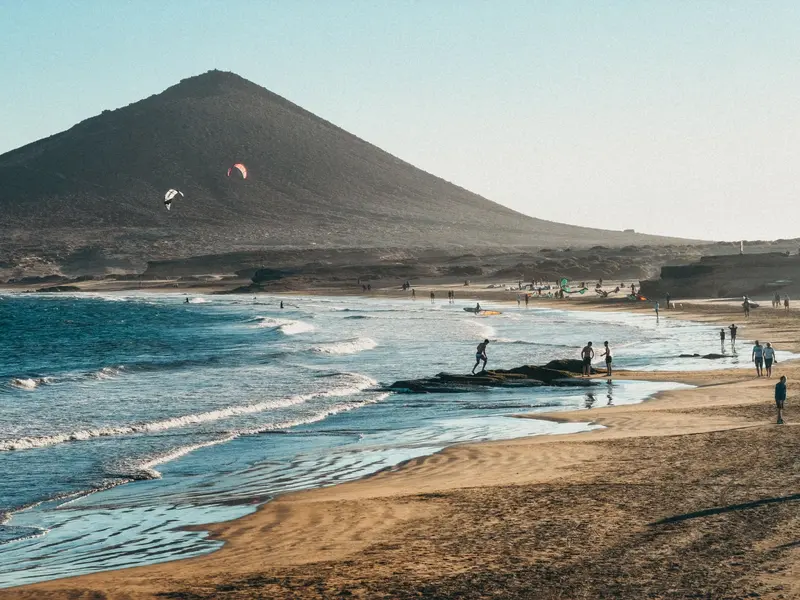
What the south doesn't tell you about is the wind. The trade wind that stalls in the north wraps around the island and speeds up in the south-east: that is exactly why El Médano is a windsurfing and kitesurfing paradise, and La Tejita, next door, gets the same wind. A sunny day with a strong wind is a sunny day with sand in your teeth.
 98
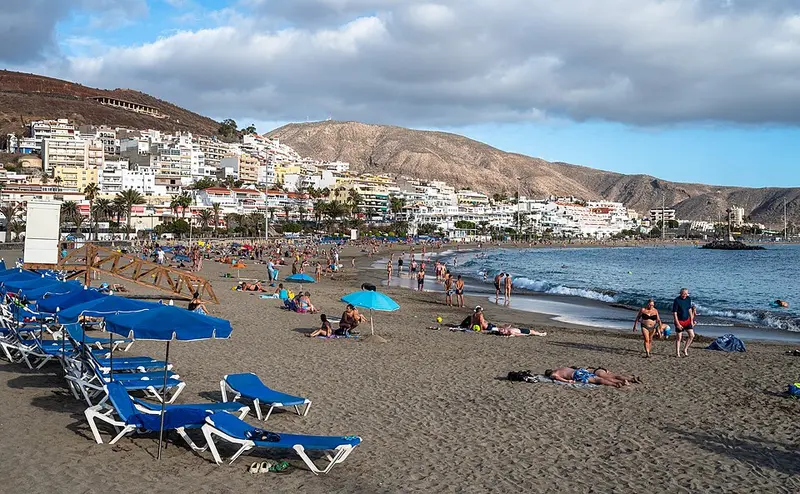
Playa de Las Vistas
Arona
20-25 °C0-5 km/h0.8 mWhole window
 97
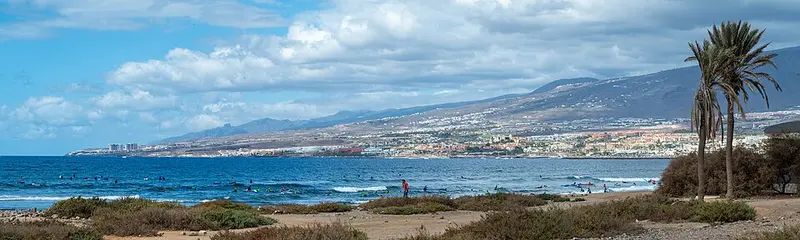
Playa del Duque
Adeje
20-25 °C4-8 km/h0.7 mWhole window
 95
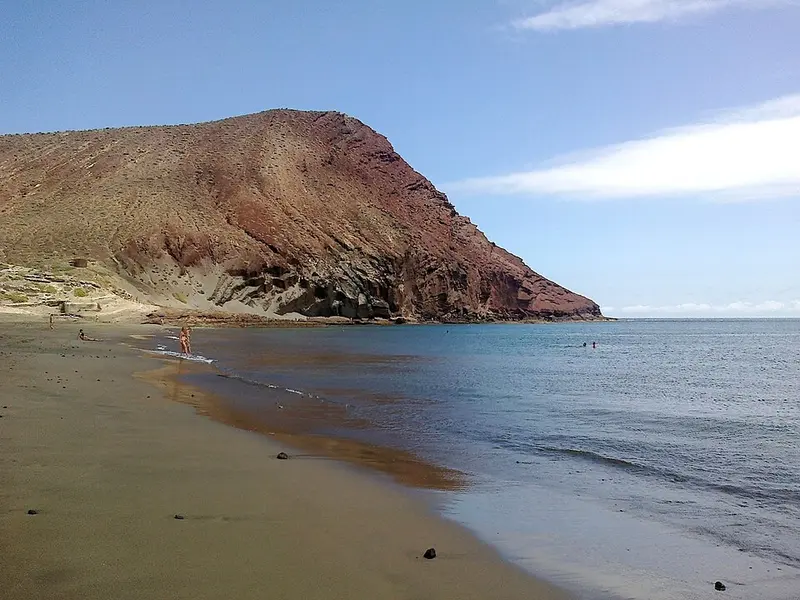
Playa de La Tejita
Granadilla
22-25 °C10-16 km/h0.7 mWhole window
 95
Playa El Médano
Granadilla
22-25 °C10-16 km/h0.7 mWhole window
The beaches of Costa Adeje and Arona (El Duque, Fañabé, Las Vistas, El Camisón) are more sheltered, and several of them, such as Las Vistas and El Camisón, have breakwaters that calm the water.
The west: the most sheltered corner
Between Playa San Juan and Los Gigantes lies the coast that gets the least trade wind, in the lee of the whole island. The afternoon sun lasts until the very end, and the sunsets, with La Gomera opposite, are some of the best in Tenerife.
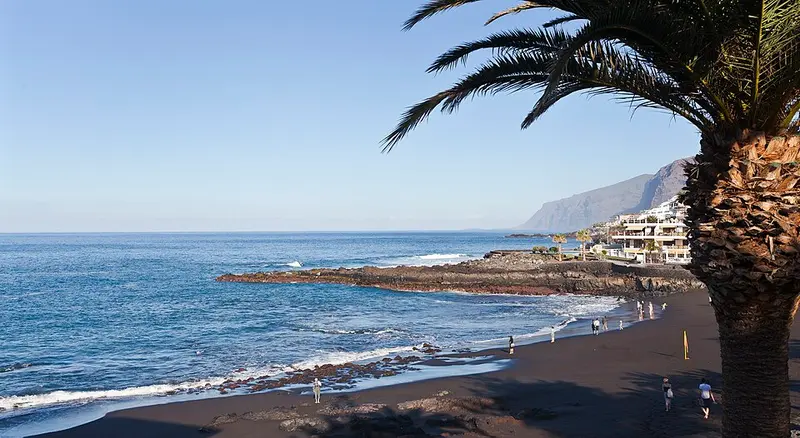 97
Playa de La Arena
Santiago del Teide
20-24 °C4-6 km/h0.8 mWhole window
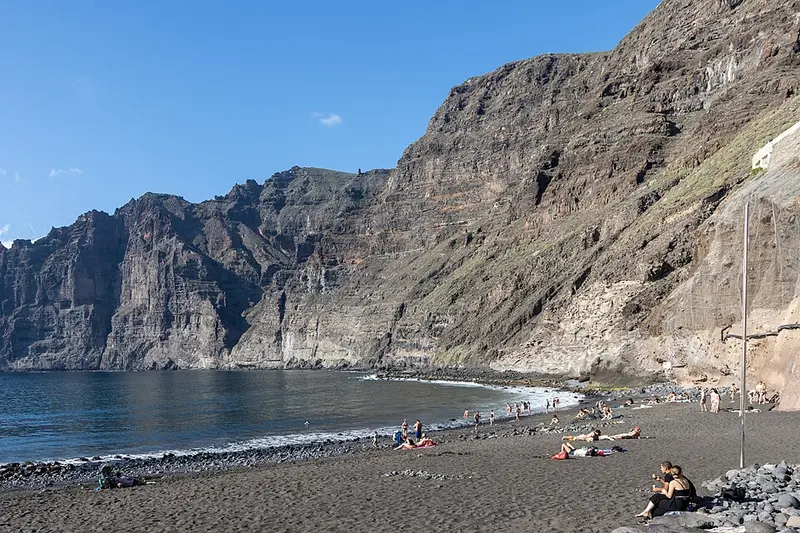 97
Playa de los Guíos
Santiago del Teide
20-24 °C4-6 km/h0.8 mWhole window
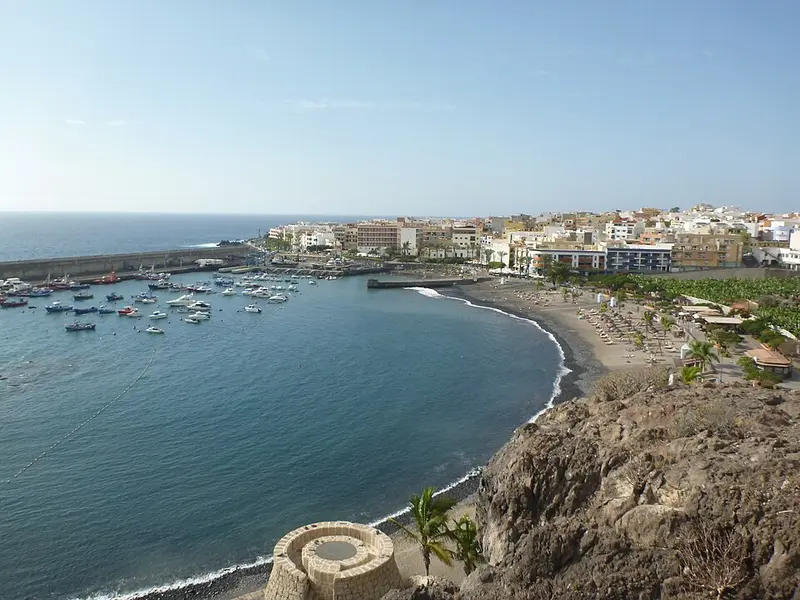 97
Playa de San Juan
Guía de Isora
20-24 °C4-6 km/h0.7 mWhole window
La Arena, in Puerto de Santiago, has fine black sand. Los Guíos sits at the foot of the Los Gigantes cliffs, and you walk down to it from the village.
The north: green, wild and full of charcos
The north is the Tenerife the sunshine brochures leave out: green, with historic towns, guachinches and a sea that commands respect. Its beaches are black sand or callao (beach pebbles), and when there's a swell many of them are not for swimming.
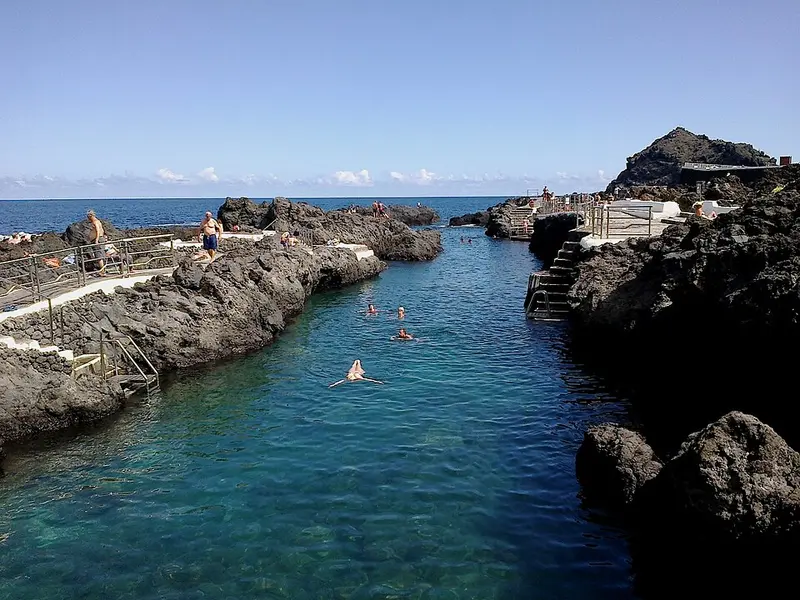
Its treasure is the charcos and natural pools: pools in the volcanic rock that the sea fills up. When the sea is calm, they're the best thing on the island.
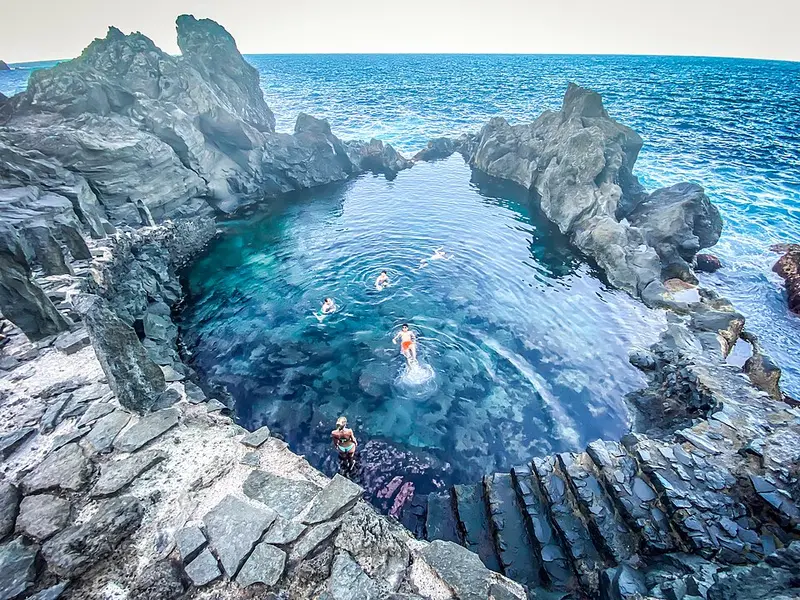 96
Charco de La Laja
San Juan de la Rambla · tide pool
21-24 °C4-7 km/h1.0 mWhole window
 95
El Caletón (Garachico)
Garachico · tide pool
21-24 °C5-11 km/h1.1 mWhole window
 97
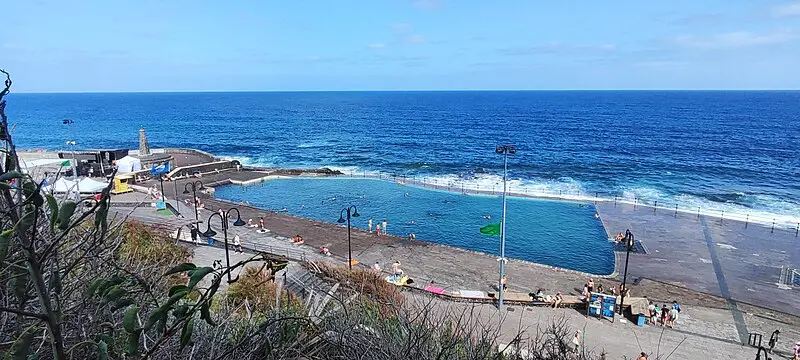
Piscinas de Bajamar
La Laguna · natural pool
21-25 °C6-10 km/h1.1 mWhole window
 96
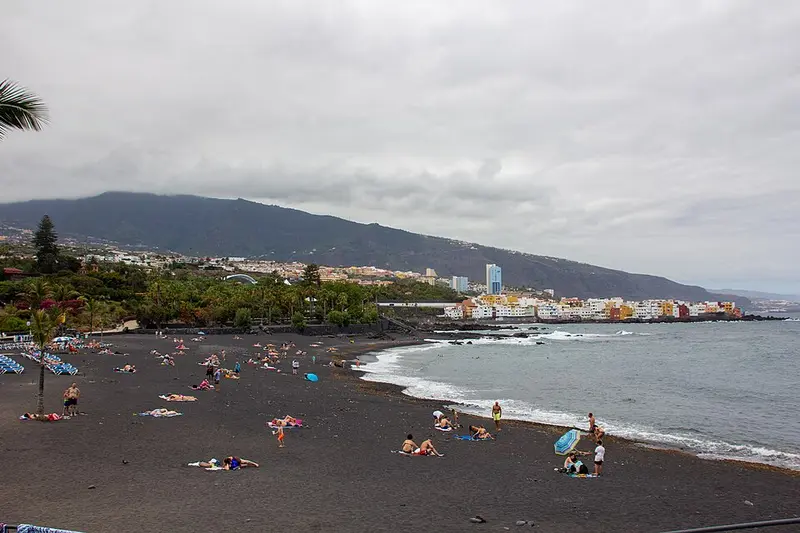
Playa Jardín
Puerto de la Cruz
23-25 °C4-7 km/h1.0 mWhole window
The pools of Bajamar and Punta del Hidalgo, in La Laguna, and Lago Martiánez in Puerto de la Cruz, designed by César Manrique, are the easy version: seawater with walls and steps. When there's a swell, the coastal ones overflow too.
Calima, the other cloud
Sometimes the problem isn't the trade wind but the east wind, which brings dust from the Sahara: calima. The sky turns yellowish, visibility drops, the heat goes up and the beach loses its charm, north and south at the same time. When it's intense, the Canary Islands Government issues a pre-alert, and people with breathing problems feel it.
The PlayaYa! score takes it into account: it's one of the six things it looks at, along with sun, wind, sea, heat and rain.
So should I stay in the north or the south?
It depends on what you've come for:
- South (Costa Adeje, Las Américas, Los Cristianos): if you want the beach almost every day, a hotel with a pool and dinner out without a car.
- West (Puerto de Santiago, Los Gigantes, Playa San Juan): the southern sun, less wind and the best sunsets.
- North (Puerto de la Cruz, La Orotava, La Laguna): if towns, greenery, food and hiking trails pull you more than a sunbed. The nights are cooler.
- Both: you can cross the island in just over an hour on the motorway. Plenty of people sleep in the south and drive north on the day the cloud lifts, or the other way round.
For what to see in each area, read things to do in Tenerife, and for everything else, what to know before you go.
How to know where it's sunny today
All of the above is the average. The actual day is another story: there are grey mornings in the south and perfect afternoons in the north, and one beach can be cloudy while another fifteen minutes away is shining.
That's why I built PlayaYa!. It gives each of Tenerife's 80 beaches, charcos and natural pools a score from 0 to 100, hour by hour, looking at sun, wind, sea, heat, rain and calima. The best ones in Tenerife today are on the web, and in the app you drag the slider and the island repaints itself 48 hours ahead, and 72 if you ask.
Today's best beach is decided by the sky, not the guidebook.

PlayaYa! is a free app for Android and iOS, built by a Canarian, that scores every beach, charco and natural pool in the Canary Islands from 0 to 100, hour by hour: 48 hours ahead, and 72 if you ask.
Which beach? Ask PlayaYa!